



















Forex trading involves buying one currency and selling another to trade changes in exchange rates. To get started, you need an account with a forex provider. The account you choose affects your trading costs, available position sizes, and account conditions.
Forex account types include standard, raw spread, zero-spread, mini, micro, cent, swap-free, demo, and managed accounts. Each has different features and limitations. Your choice should reflect how much you plan to deposit, how often you trade, and whether you want to place trades yourself or use a managed or copy trading service.

Standard Account

Raw Spread Account

Zero-Spread Account

Mini Account

What is a Forex Trading Account?
It is a brokerage account that allows traders to buy and sell global currencies in the global foreign exchange market.
Just as a brokerage account allows you to buy and sell stocks, or a bank account provides a place to keep your savings, a Forex account offers the infrastructure, leverage, and trading software necessary for you to participate in the world’s most actively traded financial market.
For example, MetaTrader 5 supports both demo and real accounts. Using the same platform does not mean those accounts have identical financial consequences or broker conditions.
How Account Types Differ
There are several ways that forex broker account types differ. Given below:
Forex Account Comparison at a Glance
The table below summarises common structures. Exact minimum deposits and trade sizes depend on the broker, instrument, platform, and legal entity.
| Account category | Costs and entry requirements | Features and limitations |
|---|---|---|
| Standard or spread-based | Spread charges; separate forex commission may be absent. Deposit and minimum volume vary. | Straightforward pricing, but spreads still affect every trade. |
| Raw spread | Usually spread plus commission. Funding and minimum volume vary. | Compare combined costs rather than the minimum advertised spread. |
| ECN or STP | Pricing, deposit, and trade size depend on the product. | Execution labels require supporting documentation. |
| Zero-spread | Commission or other charges may apply. Conditions vary by instrument and trading period. | Zero spread does not establish zero total cost. |
| Mini or micro | Smaller position sizes; deposits and pricing vary. | Useful for finer position sizing, including on some standard accounts. |
| Cent | Cent-denominated balances and broker-specific contract sizes. | Check actual exposure behind the displayed lot size. |
| Islamic or swap-free | Overnight swap treatment differs; administration charges may apply. | Eligibility and holding conditions need checking. |
| Demo | Virtual funds; simulated trading conditions. | Suitable for practice, with no evidence of future live results. |
| Managed or copy trading | Trading charges plus possible management, performance, or subscription fees. | Delegates decisions or replicates trades while retaining investment risk. |
| Premium, VIP, or Professional | Funding, volume, or eligibility requirements may apply. | Benefits and legal classification must be assessed separately. |
What is a Raw Spread Account?
A raw spread account is a type of forex trading account where you can get the market prices with spreads starting as low as 0.0 pips. For example, EUR/USD is at the bid price of 1.10201 and the ask price of 1.10203. So the gap is 0.2 pips here.
Raw Spread vs Standard Account
Here is a hypothetical illustration, not a broker quote or live test:
What Are ECN and STP Accounts?
ECN means Electronic Communication Network. The term refers to electronic infrastructure connecting trading interests or liquidity. An STP forex account takes its name from straight-through processing, which concerns automated processing and routing.
Retail account labels do not fully establish the contractual arrangement. A provider may use external liquidity and automated processing while remaining your counterparty.

Zero-Spread Accounts
A zero-spread forex account can make the quoted bid and ask equal under specified conditions. The important question is when that pricing applies and what other charges accompany it.
What Does Zero Spread Actually Include?
Includes raw prices directly from liquidity providers, a pre-determined transaction fee charged whenever you open and close a trade, fast order-filling speeds, minimal slippage, and direct access to real market depth. Additional benefits and features include leverage access, flexible position sizing, and full EA and robot sizing.
Mini and Micro Accounts
Mini and micro terminology refers to smaller trading quantities. A separately branded mini forex account or micro forex account is one way to access them, but some standard accounts also permit these sizes.

What is a Mini Forex Account?
A mini lot conventionally represents 10,000 units of the base currency, compared with 100,000 units for a standard lot. Under that convention, 0.10 standard lots equals one mini lot.
For EUR/USD, the base currency is EUR. A mini-lot position therefore represents EUR 10,000 of exposure.

What is a Micro Forex Account?
A micro lot conventionally represents 1,000 units of the base currency, or 0.01 of a standard lot.
Smaller increments let you adjust exposure more precisely. If your intended position is 3,000 units, a platform allowing micro-lot increments may accommodate it. A product restricted to 10,000-unit increments would not.
For further reading, see the mini and micro forex accounts guide.
A cent forex account changes how the balance is displayed and may use a different contract-size convention. Both details matter when interpreting the numbers on the platform.

How Cent-Denominated Accounts Work
A cent account, also known as a micro cent account, is a specialized forex trading account where your balance, profits, and losses are denominated in cents rather than whole dollars.
A cent account is just like the standard trading accounts in terms of price quotes, charts, platforms, and trading mechanics. I will give you an example; you will clearly understand:
Standard Account: Deposit $100 Balance shows as $100.00
Cent Account: Deposit $100 Balance shows as 10,000 cents
A cent account lets you experience real market execution and emotional management with minimal financial risk. Algorithmic traders use cent accounts to test new automated trading strategies in live execution environments without risking substantial capital.
Islamic and Swap-Free Accounts
An Islamic forex account generally changes the treatment of overnight swap charges. Eligibility, fees, and instrument restrictions vary, so the account requires the same careful comparison as any other product.
What makes an Account Swap-Free?
Swap-free accounts follow the rules of Shariah guidelines. CFD brokers change some account rules in several key areas: No interest (No Riba) will be included. Holding a trade open overnight, for days, or for weeks results in $0.00 in swap charges or credits. Under Islamic finance, transactions should ideally involve immediate delivery (Hand-in-Hand trade).
Different holding periods or fee rules could reverse the result. A standard account might also receive a credit on a particular position, subject to its terms.
Compare the full schedule rather than assuming one structure is cheaper. The Islamic forex accounts guide provides a relevant next step.
What Can You Learn With a Demo Account?
A forex demo account allows you to practice without risking trading capital. Its main utility is to get acquainted with the platform and test a process based on specific assumptions.

Free or Paid: Decide What You Need Help With
Use demo trading to learn about market orders and pending orders, determine stop-losses, adjust position sizes, and master the process of closing positions partially or completely.
Set your virtual balance to a number that you're actually thinking of investing. If you plan to do live trading with very small capital, but practice using US,00,000 in demo trading, then it can hide the real problems related to the position size.
Document the results obtained after excluding the reasons for entering each trade, the expected risks, and the simulated costs. A trading journal will help you understand whether a result is the result of a systematic and repeatable process, or is simply a continuation of a good result obtained by chance.

When Should You Consider a Live Account?
Before you start live trading, make sure that you can explain the contract size, calculate the possible losses, place protective orders, and are aware of all the charges or fees involved.
You also need to know when to stop trading in your trading plan. Making a profit on a demo account doesn't mean you're ready for live trading.
If you have verified a Forex demo account in Australia, check its validity, reset rules, available platforms, and compatibility with the features of your planned live account. For more comparative information on this topic, see the guide to Forex demo accounts.

Managed Accounts and Copy Trading
In the case of a managed Forex account, the authority to trade is given to someone else under an agreement. In the case of copy trading, the activity of another account through a platform or service is exactly duplicated. Both options carry the risk of losing the investor's money.
How Managed Forex Accounts Work
The management agreement should clearly state who can trade, what trades can be made, how the fees will be determined, and how you can cancel the agreement.
The power to trade (trading authority) and the power to withdraw money (withdrawal authority) are two different things. Make sure you know who your money is going to and what the manager can do.
For example, the PAMM specification in Dukascopy mentions an appointed external trader who acts through a limited 'power of attorney' or representative power. This shows how important it is to have a formal and specific contract, not relying on verbal or promotional descriptions provided by a manager.
A PAMM Forex account uses a percentage-based allocation system. A MAM Forex account uses multi-account management technology, which can support a variety of allocation methods. The difference between PAMM and MAM accounts is not the same for every provider.
Axi’s documentation describes MAM allocation options based on lots, percentages, balances, or equity. This method affects how positions are distributed among the participating accounts.
Ask how deposits, withdrawals, open positions, and various account balances affect allocation. PAMM and MAM accounts should be evaluated by their actual contracts and platform rules.

How Copy Trading Differs From Managed Accounts
Copy trading typically combines an investor's capital allocation with the trading activities of a strategy provider. Depending on the type of service, the investor may have the opportunity to control the allocation of capital, stop copying, or limit losses.
For example, the equity-to-equity model is used to determine the amount of trades copied to the cTrader account. As a result, any change in the equity of the account can affect the copied positions.

What to Check Before Choosing a Provider
Verify the authorization for the service, the custody arrangement, the terms of the withdrawal, and the manager's complete performance history. Check the return as well as the drawdown (i.e. the fall from the previous highest level of the account).
Look for open losses, variable position sizes, and strategies to increase exposure after a loss.
Fees may include management, performance, and volume charges. These individual fee categories are explained in cTrader's documentation; the charges selected for a particular strategy need to be verified separately. cTrader Copy
Related resources include MAM and PAMM accounts and copy trading platforms.
Potential benefits include different prices, account support, access to research, or negotiated terms. Eligibility may depend on deposits, account equity, or trading volume.
Evaluate written benefits instead of headings. If the improvement is low commission, calculate the savings using your expected activity. If it is a service feature, decide whether you want to use it or not.
Check to see if the benefits stop when your balance or volume falls below the eligibility threshold. Also make sure that the minimum trade size is changed.
Are Higher Account Tiers Worth the Requirements?
Let us say a hypothetical VIP level saves 1 US dollar per round trip. A total of 20 trades a month will save you 0.
This calculation will help you understand whether it is worthwhile to deposit additional funds or to meet the conditions of the trading volume. Don't trade unnecessarily to maintain a certain level.
Even if the spread is low, that advantage may fade due to a large minimum position size or some other charge. Instead of changing your plan to be eligible for an account, check to see how compatible that account is with your current plan.
The method of collection of charges varies according to the type of forex account. To make a fair comparison between them, calculate the total cost for the same currency pair, position size, and holding period. The advertised minimum spread does not always ensure the lowest overall cost.
Standard accounts typically include the broker’s markup within the spread, with no separate forex commission. R spread accounts usually have a commission associated with the titre spread. IC Markets Australia has documented this difference between their Standard and Raw Spread MetaTrader accounts. It is also necessary to verify the commission in the case of a zero-spread account before making a comparison.
Consider this hypothetical EUR/USD example using one standard lot of EUR 100,000 and a USD account. Assume unchanged spreads, no overnight holding, and no slippage:
| Cost component | Standard account | Raw spread account |
|---|---|---|
| Spread cost | 1.2 pips × USD 10 = USD 12 | 0.2 pips × USD 10 = USD 2 |
| Round-turn commission | USD 0 | USD 7 |
| Total trading cost | USD 12 | USD 9 |
Finally, check conversion, funding, withdrawal, and inactivity charges. These may depend on the broker, account currency, or payment method rather than the account category. Compare current terms for the specific entity and platform, and distinguish per-side commission from the full round-turn charge.
Set Limits for Individual Trades and Losing Periods
Define a maximum planned risk per trade, total open exposure, and a point at which you pause to review losses. These limits should be affordable within your circumstances.
Consider correlated positions. Buying EUR/USD and GBP/USD can create overlapping exposure to a weaker US dollar. Several separate tickets may therefore express much the same idea. Never assume that a larger number of positions automatically spreads risk.

For Beginners: Compare Practice Access and Position Flexibility
What will be the most suitable Forex account for beginners depends on the needs of the person concerned. An effective account needs to have the opportunity to use a realistic demo, a clear idea of the cost, and the convenience of determining the trade volume (position size) on a small scale.
Compare the minimum trade amount with your planned loss limit. If the minimum trade size is too large, the issue of a low deposit can be confusing.
Exposure, margin, and order control should be easy to understand in a Forex account created for beginners. "Excessive leverage or the "premium" label can eliminate confusion regarding the position or position of the trade.

For Scalpers: Examine Costs and Execution Conditions
The best forex account type for scalping depends on the combined cost and execution under the terms of the strategy. Compare common spreads, round-turn commissions, slippage, and authorized trading methods during the relevant session.
Automated - Verify the rules of trading, order limits, and compatibility of the platform. A raw or zero-spread label does not guarantee proper execution.
Where available, use records collected on comparable instruments and trade sizes. There is a related comparison topic in the Scalping Accounts Guide.

For Swing Traders: Include Holding Costs
In the case of positions held across multiple rollovers, the overnight charge can be more than a small spread difference.
Compare long and short rates separately. Check how the broker handles weekends, holidays, and multiple-day financing adjustments.
The holding period also needs to be calculated in case of swap-free conditions. An account that is affordable for two days may become more expensive after an administration fee limit is exceeded. Use the time period that is really necessary for your strategy.
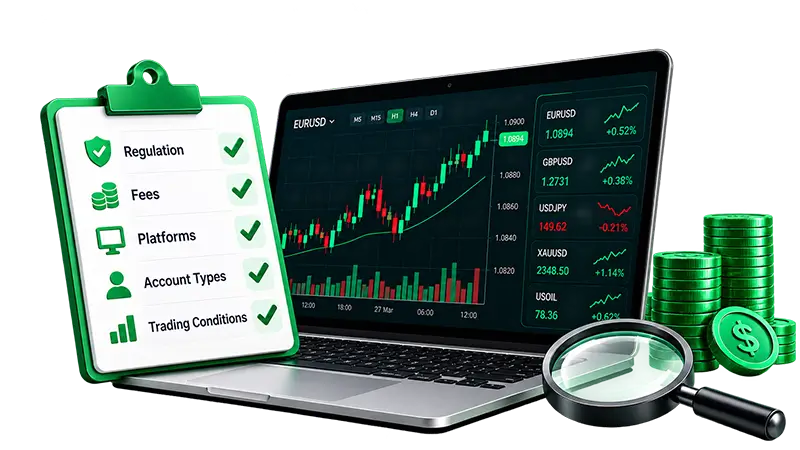
Your Account-Selection Checklist
Before choosing, confirm:
These answers address practical questions about resources, practice accounts, and learning expectations.
No. Cent refers to balance denomination and potentially a different contract convention. Micro generally refers to a smaller position quantity. Compare underlying units and the smallest permitted exposure rather than the displayed lot number.
Forex account types describe overlapping features: pricing, execution, location size, management, service, and client status. A standard account may allow micro lots. A raw account can offer swap-free terms. A professional label can describe the price without changing the legal classification.
Compare the actual contract, the total cost, the minimum exposure, the currency of the account, and the applicable security. Then test the platform and calculate a realistic trade before financing. A useful account is one whose verified terms and conditions fit your needs and whose risks you understand.
Compare selected brokers across trading platforms, account options, pricing information, and available trading features.